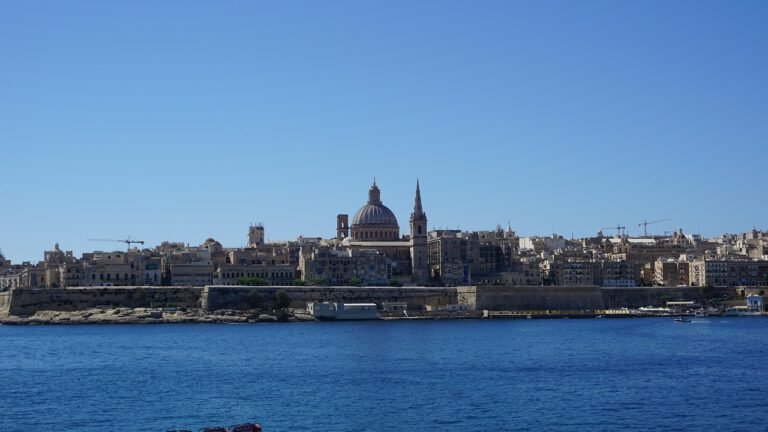
Malta Golden Visa for US Citizens: The 2026 Guide

Table of Contents
Malta Golden Visa for US Citizens: The 2026 Guide
The Malta golden visa is open to US citizens. Under Malta’s Permanent Residence Programme (MPRP), an American applicant buys a property of at least EUR 375,000 or leases one for at least EUR 14,000 a year, then pays fixed government charges. The result is permanent residence, not a passport. Because the route uses direct property rather than fund units, it sits differently in a US tax file than fund-based programmes do.
On this page
- Can US citizens get the Malta golden visa?
- What US investors need to invest
- The US tax layer
- Why Americans choose Malta residency
- The application steps and payment milestones
- Malta vs other programs popular with US investors
- Frequently asked questions
This guide is general information about the Malta Permanent Residence Programme and is not legal, tax or immigration advice. It gives no US tax advice. Programme terms, figures and eligibility lists can change. Obtain independent professional advice, including from a qualified US tax adviser, before making any application or investment decision.
Can US citizens get the Malta golden visa?
Yes. Malta’s Permanent Residence Programme (MPRP) is open to third-country nationals, and the United States is not on Residency Malta’s ineligible list. Eligibility turns on the capital test, a qualifying property purchase or lease, the fixed contributions and due diligence. It grants permanent residence in Malta, not citizenship or a passport.
The legal basis is Subsidiary Legislation 217.26, most recently amended by Legal Notice 146 of 2025. It excludes EU, EEA and Swiss nationals and anyone named in sanctions the Residency Malta Agency follows. As of September 2026, the United States is not on the ineligible-country list in the Agency’s MPRP FAQ (version 2.6.5), which the Agency says may be revised from time to time. For the full checklist, see our Malta MPRP requirements guide.
What “golden visa” means in Malta: residence, not a passport
“Golden visa” is the search term; the product is permanent residence. Malta’s citizenship by investment route closed following the EU Court of Justice judgment in case C-181/23 of 29 April 2025, so no investment in Malta today buys a Maltese passport. See Malta golden visa vs citizenship.
Who counts as a dependant
One application can cover:
- your spouse;
- minor children;
- unmarried adult children aged 18 to 28 (under 29 when you apply) who are principally dependent on you;
- adult children certified as disabled;
- parents and grandparents of you or your spouse who are not in full-time employment and are principally dependent on you.
That is up to four generations on one file. Fees differ by category, as the cost table below shows.
What US investors need to invest
The property or lease requirement
You choose one of two property routes:
- Buy a property for at least EUR 375,000, or
- Lease one for at least EUR 14,000 a year.
Both thresholds apply anywhere in Malta or Gozo. The regional discount that older guides still quote for the south of Malta and Gozo was removed by Legal Notice 310 of 2024 with effect from 1 January 2025. You must hold the qualifying property, owned or leased, for at least five years from the grant of residence, and after that you must still hold a residential property in Malta or Gozo, owned or leased.
The capital test (a wealth test, not a payment)
Separately, you must show assets of at least EUR 500,000, of which at least EUR 150,000 are financial assets, or assets of at least EUR 650,000, of which at least EUR 75,000 are financial assets. This money stays yours. It is evidence of means, not a charge, but you must keep that level of capital for five years from the grant of residence.
Public costs in US dollars
| Item | EUR (legal amount) | USD at 1.1367 (ECB, 24 Sep 2026) | Paid to |
|---|---|---|---|
| Government contribution (flat, owned or leased) | 37,000 | 42,100 | Government of Malta |
| Administrative fee, main applicant | 60,000 (15,000 + 45,000) | 68,200 | Residency Malta Agency |
| Dependant fee, spouse, minor child or certified-disabled adult child | 0 | 0 | |
| Dependant fee, adult child 18 to 28, or dependent parent or grandparent | 7,500 each | 8,500 each | Residency Malta Agency |
| NGO donation | 2,000 | 2,300 | A Maltese NGO |
| Property purchase (minimum) | 375,000 | 426,300 | Seller (asset you keep) |
| or property lease (minimum) | 14,000 a year | 15,900 a year | Landlord |
Converted at EUR 1 = USD 1.1367, the European Central Bank euro reference rate of 24 September 2026, rounded to the nearest 100. Figures in EUR are the legal amounts; USD is illustrative and moves with the exchange rate.
Not included, because they vary by case and are not fixed in the programme rules: property purchase taxes, notary and legal costs, insurance, due diligence costs and advisory fees, which are quoted per engagement. We do not estimate them here. Also outside the table: Residency Malta’s current programme brochure lists a residence card fee of EUR 500 per person, covering five years.
Worked example: a US family of four
Take a main applicant, a spouse and two children under 18.
| EUR | USD (at 1.1367) | |
|---|---|---|
| Government contribution | 37,000 | 42,100 |
| Administrative fee | 60,000 | 68,200 |
| Dependant fees (spouse and minors exempt) | 0 | 0 |
| NGO donation | 2,000 | 2,300 |
| Fixed charges | 99,000 | 112,500 |
| Purchase route: fixed charges + EUR 375,000 property | 474,000 | 538,800 |
| Lease route: fixed charges + EUR 14,000 a year for the 5-year minimum | 169,000 | 192,100 |
On the purchase route, EUR 375,000 of the total is a property the family owns. A 19-year-old child who is unmarried and principally dependent on you adds EUR 7,500 (about USD 8,500).
The honest trade-off: the EUR 99,000 in fixed charges never becomes an asset. In return, the programme needs no fund units at all, which matters for the next section.
The US tax layer: what changes for a US person holding Malta residency
This section flags questions for a US tax adviser. It does not answer them.
You still file in the US
The IRS states that US citizens living or travelling abroad generally must file US income tax returns as if they lived in the US. Malta residence does not change that. Confirm your filing position with a US tax adviser.
FBAR and Form 8938 on Malta accounts
A Malta bank account can trigger two separate US reports:
- FBAR (FinCEN Form 114) if the aggregate value of your foreign accounts exceeds USD 10,000 at any time in the calendar year.
- Form 8938 under IRC section 6038D. For taxpayers living abroad, the thresholds are more than USD 200,000 on the last day of the year or more than USD 300,000 at any time (single or married filing separately), and more than USD 400,000 or USD 600,000 for joint filers. Different thresholds apply to filers living in the United States.
The IRS Form 8938 Q&A states that directly held foreign real estate is not a specified foreign financial asset, so the Malta property itself does not go on Form 8938. The accounts that fund it may. Confirm both reports with a US tax adviser.
Why the property route sidesteps the PFIC question that fund routes raise
A passive foreign investment company (PFIC) is a foreign corporation with 75% or more passive income or at least 50% passive assets (IRC section 1297, as set out in the Instructions for Form 8621). The PFIC regime applies to foreign corporations. A home you hold directly is not one.
Several golden visa programmes are completed through units in a non-US fund, and a non-US fund treated as a corporation for US tax purposes is usually a PFIC, which brings Form 8621 filings into play (the status depends on the fund). The MPRP needs no fund units: a directly held property or a lease completes it. Confirm how your own holding is treated with a US tax adviser before you commit.
The US-Malta treaty and social security: what they do not do
The United States and Malta have an income tax treaty in force, but the IRS states that treaties generally do not reduce the US taxes of US citizens, with certain exceptions.
On social security, the US has totalization agreements with Italy, Portugal, Greece and Hungary, among other countries, according to the Social Security Administration’s list. It has none with Malta. Confirm the consequences for any work you do from Malta with a US tax adviser.
Why Americans choose Malta residency when they already travel visa-free
US citizens can already visit the Schengen Area without a visa for short stays, so the case for Malta rests on the right to reside. The MPRP gives permanent residence in an EU member state, on a status that can cover the whole family, from dependent grandparents to unmarried, dependent adult children. For an American household that wants a settled European base, that is the product, secured through property the family owns or leases.
What it is not: a tax plan. This guide makes no claim about how Malta taxes an MPRP holder. Treat residence and tax as two separate pieces of work.
The application steps and payment milestones
The programme rules fix the payment timetable, and that is the most reliable way to plan the sequence:
- Submission. Your application goes to the Residency Malta Agency through a licensed agent, with the evidence for the capital test. The first EUR 15,000 of the administrative fee is due within one month of submission.
- Due diligence. The Agency checks the applicant and every dependant, including against the sanctions lists it follows.
- Letter of Approval in Principle. The remaining EUR 45,000 of the administrative fee is due within two months of this letter.
- Government contribution. The EUR 37,000 contribution is due within eight months of the Letter of Approval in Principle.
- Property, donation and insurance. Within the same eight months you present title to the qualifying property (purchase or lease), make the EUR 2,000 NGO donation and show health insurance. The Agency may extend these time limits where good cause is shown. Confirm the deadlines for your case against the Agency’s current guidance.
We do not quote a total processing time, because the programme rules fix none. Plan around the payment milestones.
Malta vs other programs popular with US investors
The US tax layer separates the programmes American investors compare most often more sharply than the headline prices do:
- Hungary (fund route). Completed through units in a registered fund, so the PFIC question arises. The US-Hungary income tax treaty was terminated effective 8 January 2023 and gives no relief for periods from 1 January 2024. A US-Hungary totalization agreement exists. See Hungary golden visa for US citizens.
- Portugal (ARI fund route). Also completed through fund units, so the PFIC question arises. A US-Portugal totalization agreement exists. See Portugal golden visa fund route for US citizens.
- Malta (MPRP). Completed through a directly held property or a lease, with no fund. No US-Malta totalization agreement.
None of these is automatically right. Malta suits the American family that values permanent residence, four-generation cover and a clean structure over the lowest entry cost.
Frequently asked questions
Can US citizens get Malta permanent residency?
Yes. The MPRP is open to third-country nationals, and as of September 2026 the United States is not on Residency Malta’s published ineligible list. Applicants must meet the capital test, buy or lease a qualifying property, pay the fixed charges and pass due diligence.
How much does the Malta golden visa cost for an American family of four?
Fixed charges are EUR 99,000 (about USD 112,500 at the ECB rate of 24 September 2026), with no fees for the spouse and minor children. Add a EUR 375,000 purchase, for EUR 474,000 in total, or a EUR 14,000 a year lease, for EUR 169,000 over five years.
Does Malta residency cause PFIC problems for US citizens?
The MPRP itself needs no fund units. A directly held property is not a PFIC, because the PFIC rules apply to foreign corporations. How you hold the property and your other assets can change the answer, so confirm your structure with a US tax adviser.
Do I need to file FBAR or Form 8938 for a Malta bank account?
FBAR applies if your foreign accounts together exceed USD 10,000 at any time in the year. Form 8938 applies above its thresholds, which for filers living abroad start at USD 200,000. The directly held property itself is not reported on Form 8938.
Does the US-Malta tax treaty reduce my US taxes?
Generally no. The IRS states that tax treaties do not reduce the US taxes of US citizens, apart from certain exceptions. There is also no US-Malta social security (totalization) agreement. Take both points to a US tax adviser.
Is Malta residency the same as a Maltese passport?
No. The MPRP grants permanent residence only. Malta’s citizenship by investment programme closed after the EU Court of Justice ruling in case C-181/23 on 29 April 2025.
The bottom line
For US citizens, the Malta golden visa means permanent residence under the MPRP: EUR 99,000 in fixed charges for a family of four, plus a EUR 375,000 property or a EUR 14,000 a year lease, with room for four generations on one application. The American-specific work sits on the US side (filing, FBAR, Form 8938 and how your holding is treated), and it belongs with a US tax adviser. For the full programme context, see the pillar guide to the Malta Permanent Residency Programme, and for every line of the budget, our guide to Malta permanent residency cost. For a family-specific assessment, the Aegir Global team advises American families and their advisers, and advisory fees are quoted per engagement.
Table of Contents